
Developing for retro hardware is often seen as a “lost art,” but for me, it was the ultimate challenge. I’ve always been a fan of the Nintendo Game Boy, and I wanted to see if I could push myself by working within the limitations of the 1989 handheld.
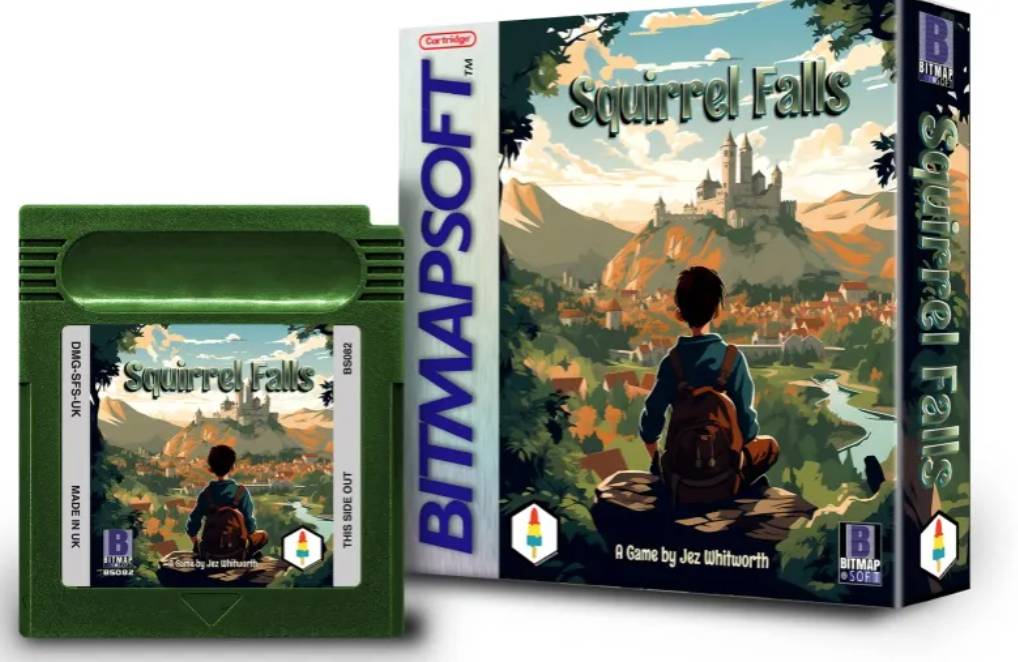
What started as a hobby project eventually became Squirrel Falls, a physical release published by BitmapSoft. If you’ve ever dreamed of seeing your code on a real cartridge, here is the honest journey of how I made it happen.
1. Finding Focus in the Game Jam Scene
The learning curve for any retro game development is a huge mountain to climb. To keep me focused and to help me connect with other retro developers I joined a Game Boy game jam over on Itch.io. This particular game jam challenged people to develop a game for the Game Boy within a three month period. It’s amazing how a tight deadline can really focus the mind. Usually game jams are set over a week or a weekend so these are really designed to help you prototype an idea quickly, which is what I love about them. You can see a list of the up and coming game jams here.
I was able to put together a game that I had first started to plan on paper, it was called Squirrel Falls where you play as a parcel courier in a woodland town, but as you deliver packages, you uncover dark secrets that turn a cosy exploration game into a fight for survival. I used two pieces of software to help me develop the game. The first was GB Studio, a game engine that allows you to develop ROMs for Game Boy cartridges and emulators. The second peice of software I used was called Tiled and this was to help produce all the in-game graphics whilst working with the handheld’s limitations.

My Advice: If you are stuck for inspiration, enter a Game Jam. The community is incredibly supportive, and the feedback from like-minded creatives is so useful in polishing your game. You can also make life easier when starting out by working with a game engine to get you up and running.
2. The Leap from Hobby to Business
I was relieve to see that the community loved my strange sense of humor I injected into the game. That buzz caught the attention of BitmapSoft, a publisher specialising in new games for retro consoles. They offered a deal to bring Squirrel Falls to market, provided I finished and polished the game.
This was an uncomfartable transition if I’m honest. When the conversation shifts to contracts, royalties, and Intellectual Property (IP), the project stops being just fun and starts becoming a business. It’s a shift every aspiring game dev needs to be prepared for.
3. The “Year and a Half” Wall
One thing people rarely tell you about game dev is that you might/will grow to dislike your own game. After the initial excitement, I spent 18 months of solid work on development. It was so frustrating. I’d code a new feature only to have it break three other things with every change and update requiring huge amounts of time to test. Testing gets overlooked so many times, yet it’s so important and in my case, took the longest of all, though I was lucky to have the BitmapSoft community to help me test the final product at the end and to hunt down any last minute bugs.
My Advice: Be prepared to work on one single project for a long time. It requires a level of discipline that goes far beyond the initial “creative spark”.
4. Artwork
Since this was a physical release, I needed box art and an instruction manual. I reached out to local art colleges and even friends of friends, but I didn’t have much luck.
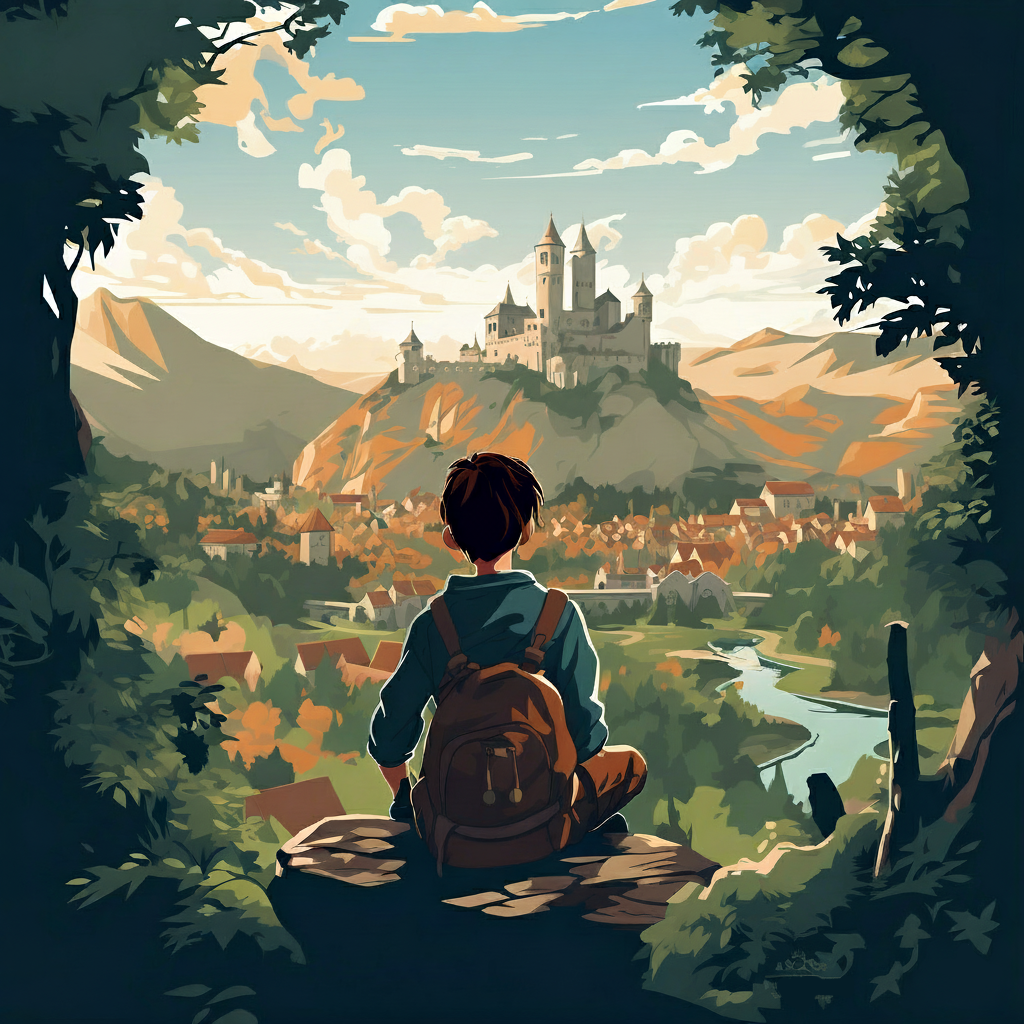
I had to do all the artwork myself as a result. This added months to the timeline and another steep learning curve as I’m not very good at digital art, but eventually, I produced the box art and manual layouts. Seeing that final approval felt like a massive weight lifting off my shoulders and I got such a rush seeing what the packaging and instruction booklet would like. I have copies of both framed and hanging on my wall.
5. Summer Release
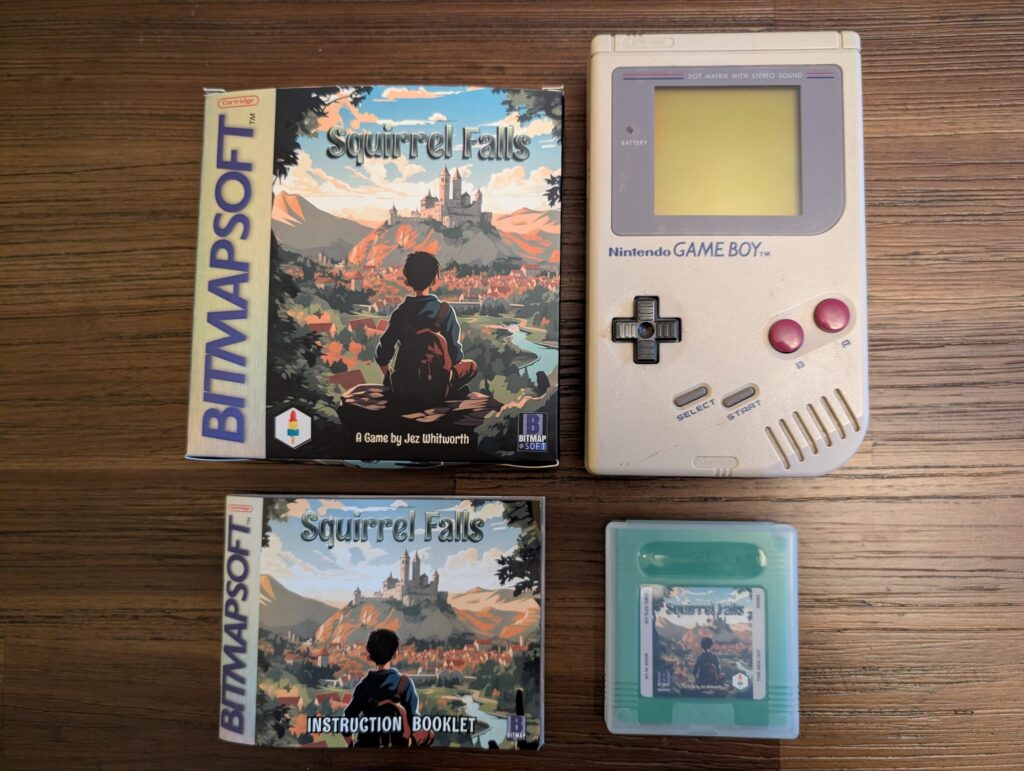
Two years after that first Game Jam, Squirrel Falls was released.
After taking a much-needed break, I finally sat down with a physical copy and played it through, knowing that others will be playing it too made me excited and nervous at the same time. As it’s a physical copy, any new bugs or issues can’t have an update downloaded to it like a modern game would. A few months later, the first royalty payment is arriving. While it was never about the money, there is an incredible sense of pride in knowing that the silly game I started for fun is now a physical product being played by retro gaming enthusiasts.
If I can do it, you can too. The game dev community is waiting for your ideas, so start your (game) engines! And if you’re still stuck for inspiration, you can buy Squirrel Falls here!